
Happy to share our new publication on source-space connectivity! The article “Magnetoencephalography Source Connectivity Pipeline Reveals Long‐Range Connectivity in Audio‐Visual Integration” has just been published in the European Journal of Neuroscience.
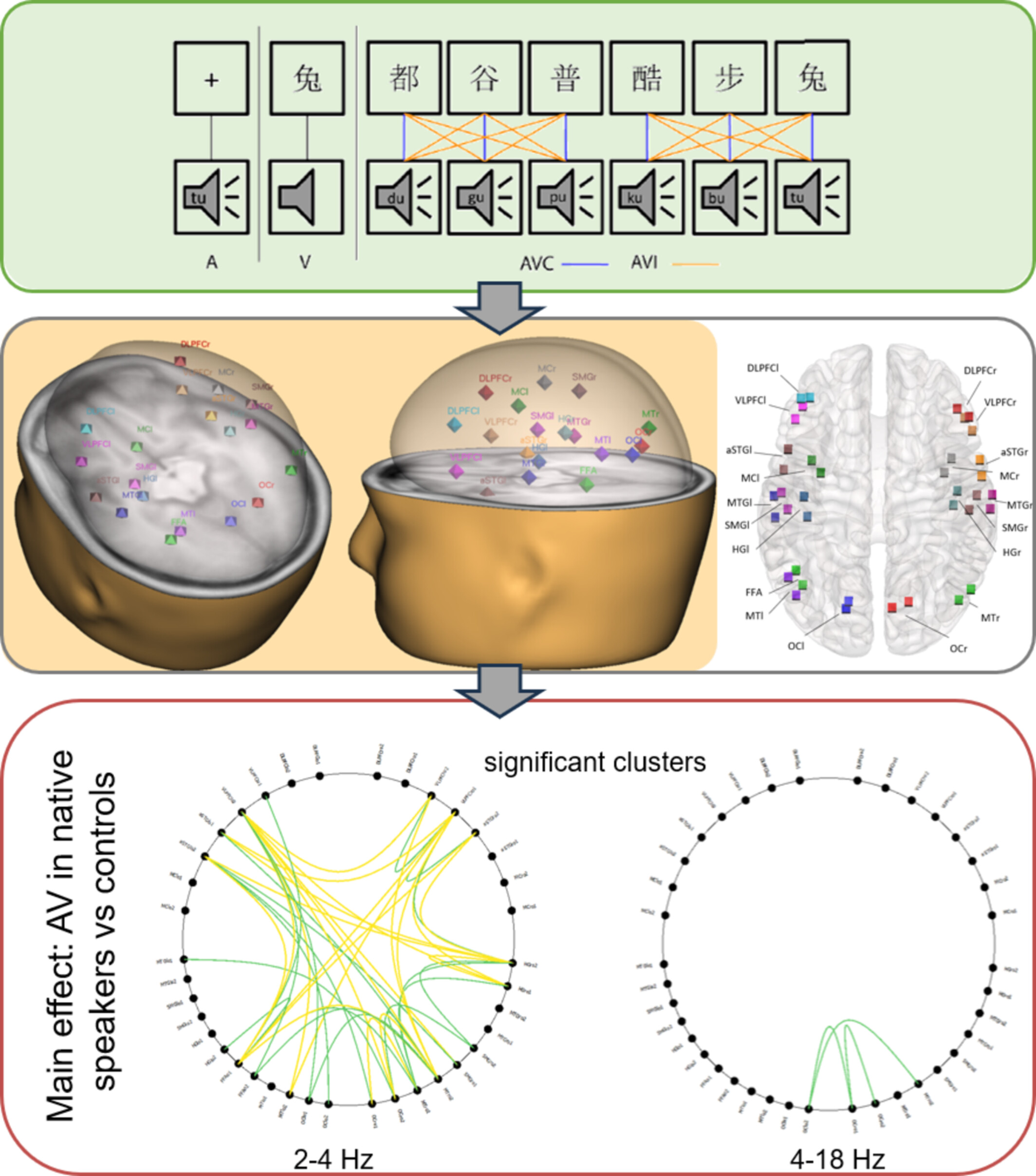
This study shows that by applying a pipeline of individual source montages, connectivity analysis, and statistic modeling, new insights into audio-visual integration in the human brain were obtained. Using a paradigm with matching and non-matching auditory and visual stimuli in Chinese, we observed enhanced long-range connectivity in the delta frequency band in native speakers compared to a control group.
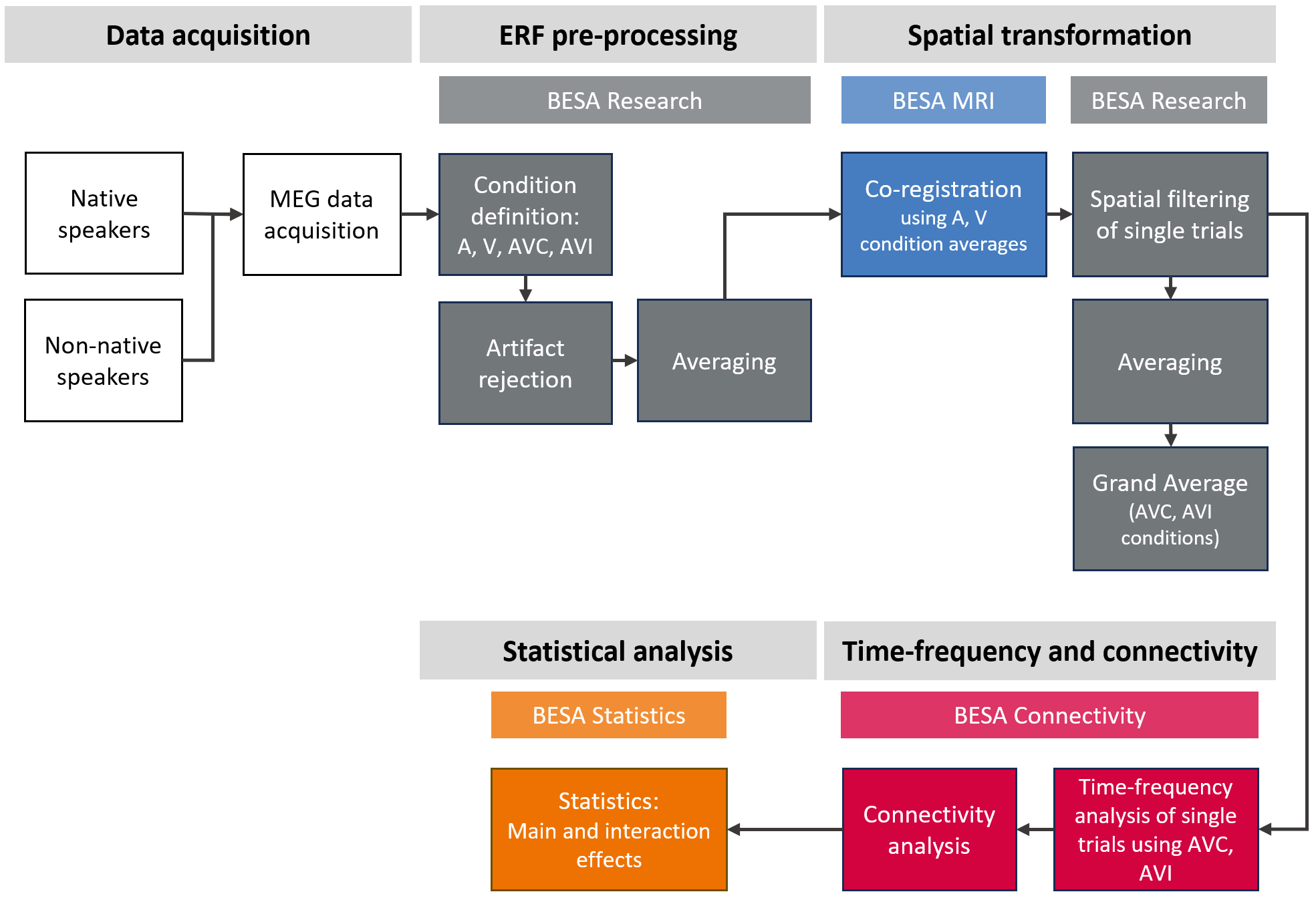
An interaction effect analysis showed differences between matching and non-matching stimuli, with the fusiform face area showing differential engagement, though these effects generally trended below significance across regions.
In the absence of individual MRI data, we improved source modeling accuracy by leveraging known locations of primary auditory and visual responses to co-register individual data with a template brain.


Comments are closed.